The table and the goal
Poker is played between two and ten players around a table with a single 52-card deck. The goal of a single hand is simple: build the best five-card poker hand out of the cards you're dealt, or convince every other player to fold before showdown. Do that better than everyone else over hundreds of hands and you're a winning player. Do the math wrong and someone else takes your chips home.
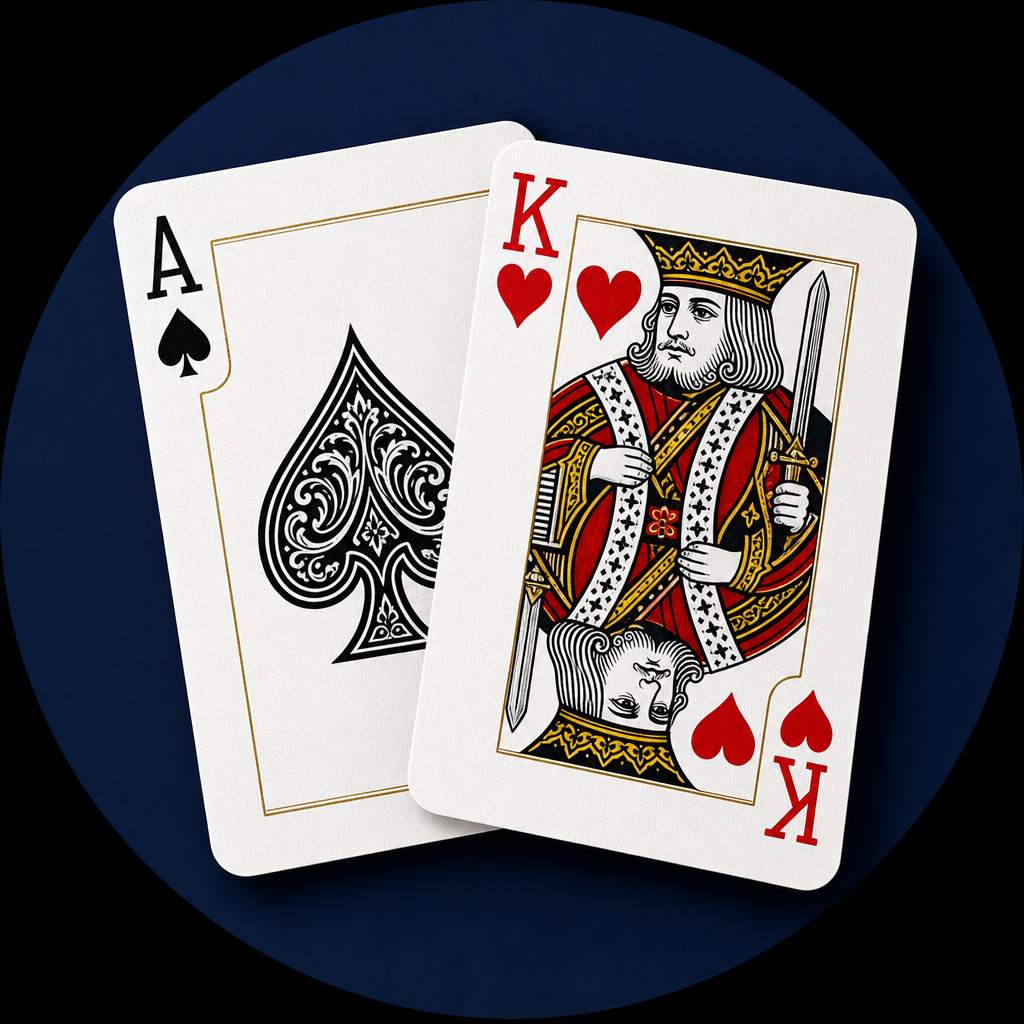
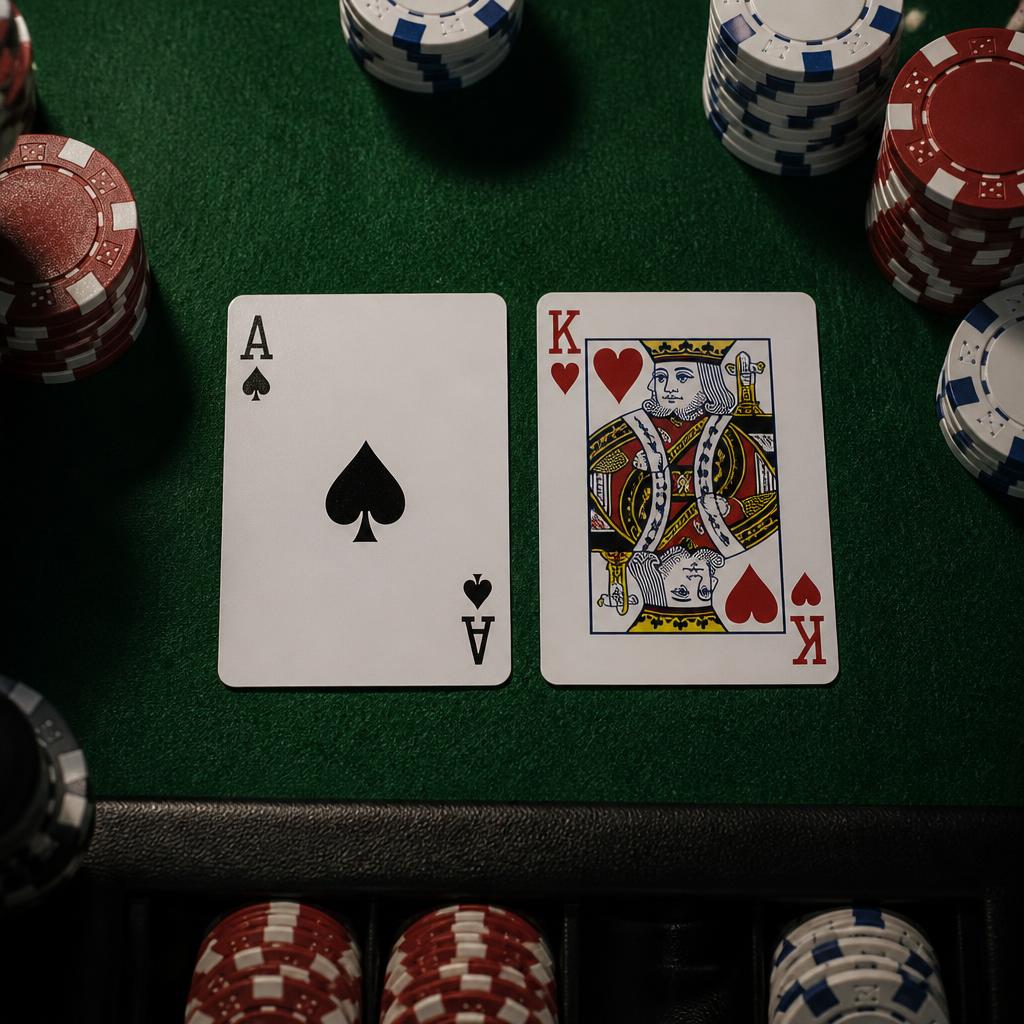
Each player is dealt two private cards, called hole cards. Over the course of the hand, five community cards are revealed in the middle of the table. You combine your two hole cards with the five community cards to make the best possible five-card hand.
The blinds — how the money gets in
Before any card is dealt, two players are forced to put chips in the pot. The player to the left of the dealer button posts the small blind; the next player posts the big blind, which is exactly double. These forced bets guarantee that every hand starts with something worth fighting for, and they prevent players from waiting forever for premium cards. After each hand the dealer button moves one seat clockwise, so the blinds rotate around the table.
The four betting rounds
1. Preflop
Each player receives their two hole cards face-down. Starting from the player to the left of the big blind — a position known as "under the gun" — action moves clockwise. On your turn you may fold, call the big blind, or raise. A raise must be at least double the last bet unless the room's rules say otherwise.
2. The flop
Once preflop betting is complete, the dealer burns one card and deals three community cards face-up. Betting reopens starting from the first active player left of the button. Now you can check (bet zero) or bet. If someone bets, others must call, raise or fold.
3. The turn
A fourth community card is dealt. Betting proceeds the same way — but stakes typically double, and the pot is now large enough that a single mistake can end your session.
4. The river
The fifth and final community card is dealt. One last round of betting takes place. If more than one player is still in the hand after the river bets are called, the remaining players go to showdown — cards on the table, best hand wins.
Hand rankings
Poker hands are ranked from strongest to weakest as follows: Royal Flush, Straight Flush, Four of a Kind, Full House, Flush, Straight, Three of a Kind, Two Pair, One Pair, High Card. When two players hit the same hand type, the higher-ranked cards inside the hand win — this is what poker players call a "kicker" battle.
Etiquette that keeps you welcome
- Act in turn — don't fold, bet or muck out of sequence.
- Keep your hole cards close and always visible to the dealer.
- Announce your action verbally in live games ("raise to 20") to avoid disputes.
- Tip the live dealer when you win a decent pot; it's the culture.
- Online, don't slow-roll: if you have the nuts, show quickly.
Where Advantage Players fits in
Once you know the rules, the next question is always the same: should I call this bet? That's where Advantage Players earns its $8.89/month. The floating overlay reads your cards and the board, calculates your live win probability against the number of opponents at the table, and tells you exactly where you stand. New players use it to learn faster. Regulars use it to remove the last few percent of leaks from their game.